Trevone Quarry
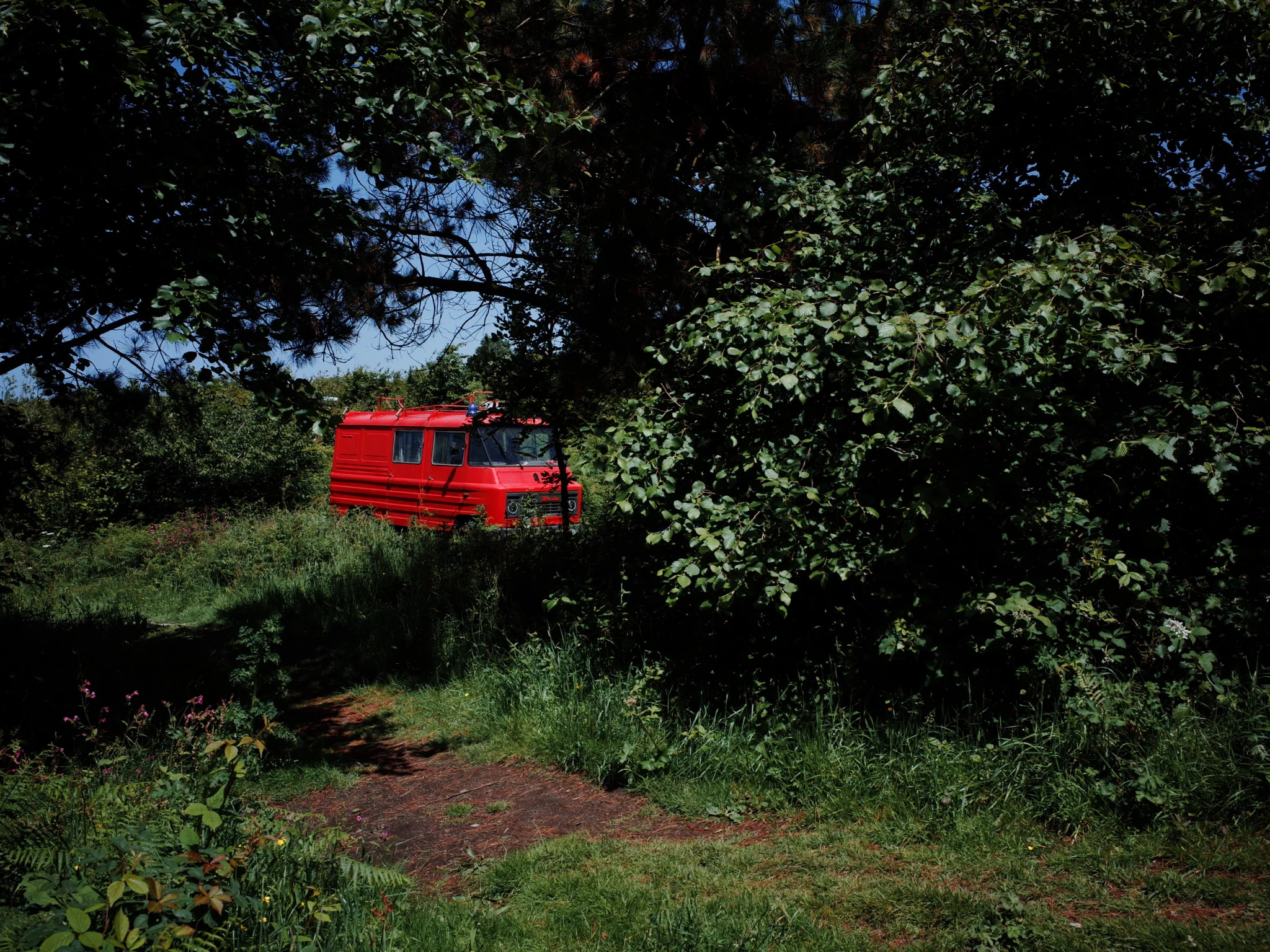
In 2009, Rob Higgs bought a derelict granite quarry outside Penryn in Cornwall. The planning permission said: extract the remaining granite, or convert to industrial agriculture. He did neither.
The original idea was simple - replicate the freedom he’d found at a boatyard in Ponsharden: rent a bit of space by the water, do your life as long as you pay the rent, no questions asked. (Ponsharden, not Pendennis. Pendennis is the superyacht marina. Ponsharden is the ratty working end - which is precisely the point.) Get sculptors and musicians and people who can fix things together on a bit of land. Plant trees everywhere. That would be enough.
The focus shifted. Environmental crisis, refugee crisis, biodiversity loss. The woodland at Trevone turned out to be temperate rainforest - one of the rarest habitats in the UK. Restoring it became as central as housing people.
What exists now holds four things together at once: a residential community of around 19 people living in self-built structures and caravans, a sustainable industrial estate, a rewilding and species reintroduction project, and a working farm. The hope, in Rob’s words, is that the four benefit each other the way an ecosystem does.
The model for housing is this: Trevone pays for the materials, you build your own workshop or living space, and you don’t pay rent for however long the build takes - six months to five years depending on the scale. Then you pay low rent because the building cost very little. The distinction matters: arriving with no money is not a barrier. If the will is there, the build can happen. No cars for new residents, not as a rule but as a condition of the offer. Whatever you build on your pitch stays with Trevone when you leave, for whoever comes next.
Rob calls the people drawn to this place apocaloptimists.
“If it’s all going to shit, who do you want in your village? Not only the traditional crafts - carpenters, potters - but people who can get shit working and people you can have a beautiful lovely time with.”
The forge
Lisa came sixteen years ago. Rob had found an old forge building on the land - a granite quarry building, derelict, a tree growing inside. They hacked through bracken and brambles, through a big granite doorway, worked around the tree, and found the blacksmith’s forge half still integral to the structure.
“For me as a traditional blacksmith, and one of very few traditional blacksmiths in Cornwall, it felt really important to be living and working in that heritage building. I really felt a legacy of the past blacksmiths and the quarry workers and the type of things that would have been being made in this building.”
The landscape around it had been used as a local rubbish dump. Clearing it, she found remnants of past industry - bits of metal, fragments. “The magic of being a blacksmith is that you can put those pieces of metal into the forge fire and transform them into something else - give them a new life, give them longevity. That alchemical transformation in the material.”
She built a shepherd’s hut to live in. Moved her business in. That was the beginning.
The planning fight
Nineteen eviction and enforcement notices over the years. Every investigating officer acknowledged that what was happening was a good thing. The legislation simply wasn’t designed for it.
Rob appealed on 96 grounds, went to public inquiry, self-represented. Won on virtually everything. The last planning battle took four years and cost £80,000 to fight.
“Planning is one of the keystones, the key holders, the gatekeepers stopping this mass transition. Every fucker wants to be able to buy a little bit of land, have their own little thing, work a little bit, grow the garden, do the veg - the lockdown dream. And planning is what’s stopping it.”
The outcome: live/work residential planning permission. The income from caravan rents now funds the nature restoration work - species reintroduction, wetland creation, woodland management, orchards, food forest.
Rob Higgs, Trevone Quarry
Temperate rainforest
The woodland at Trevone is temperate rainforest. This is not a metaphor or an aspiration - it is a classification, one of the rarest habitat types in the UK and globally. Rob had bought an oak forest without quite knowing what he had.
He now works with the Woodland Trust and thinks in whole ecological chains: the relationship between the rainforest canopy and the estuary, the fish cycle, the carbon locked in the nutrient soup that feeds out before the North Atlantic brings it back in via krill. The site has moved from an artist community to something that holds artistic, residential, ecological, and agricultural functions simultaneously - not as separate programmes but as a single system.
Living here
Oli Sword arrived from Scotland a year ago, via word of mouth. Was studying fine art, deferred his degree. Ran water and electricity cable through the gorse bush with his brother the day after moving in.
“I’ve heard it described as anarchist utopia, which I quite like as an outside representation. But for me it’s about using the materials and the creativity that comes from that - being able to create and sustain yourself in harmony with nature rather than working against it. Using reclaimed materials, natural materials as far as possible, and being pretty submerged in a pretty wild place that was ex-industrial, but the nature is just taking it back.”
On his degree: “I’ve got more inspiration from being up here and being surrounded by interested people than in the education system. Our work was never graded - our writing was graded, and it’s like, I’m not here to be a writer.”
Oli Sword, artist and resident at Trevone
Sophie Miller has been here six years, since her late forties. Trained in theatre, then art, then activism. Has children. The adjustment was real.
Sophie Miller, artist, activist and Trevone resident
“This year we had 56 days of solid rain in the winter and that was really hard. Just the relentlessness of it. At the beginning it’s beautiful down in the woods when it rains, it really is lovely. And you can have that and you can also have every fucking thing is wet and everyone’s stuff is wet. And you wake up in the morning and you just hear the rain again.”
No cars on site. Five-minute walk to the washing machine in a barn at the top of the hill. “I’m a 50-year-old woman and I’m five foot three and not built in a particularly strong way. So I lean on other members of the community for the more practical physical tasks and I bring my elements. We don’t all have to do everything.”
Dave and Lisa: “We feel we’re living in the height of luxury. We’re incredibly lucky living in this utter privilege. But if people are used to a more convenient world, to them, I suppose we’re peasants.”
Dave and Lisa, artists and residents at Trevone
Lisa’s advice to anyone thinking about it: “Jump and do it and be poor and happy. There’s a lot more happiness to be found in this type of life than in striving for money and wealth and property ownership. You can be poor and fulfilled - perhaps even more so than if you were wealthy.”
Sophie’s closing thought: “Spend as much time in nature as possible. Even whatever small part of nature you have. It doesn’t have to be big. It doesn’t have to be an amazing beautiful place. Just find tiny little bits of nature and spend time in it. Push your face into a rose and inhale it. Bury your face in the moss on a tree. Have those sensory experiences with nature - we’re designed for it, we need it to feed us. It’s free. It’s not monetized. It doesn’t perpetuate the system that we’re in. And probably that’s another reason why it’s incredibly important to do it.”
Rob’s final word: “Don’t seek permission. Seek forgiveness. The legislation is still in your favour. Everyone I know who’s done it hasn’t lost. They can give up, but it takes five, ten, fifteen years of bureaucratic fighting - and it’s getting easier and easier. Just get on with it.”
Further reading
Trevone - documentary film, 99p Films, 2024. Crowdfunded December 2024; check 99p Films’ channels for release and screening updates. Oli Sword makes sculpture under the name Wysax.