Homebaked Community Land Trust
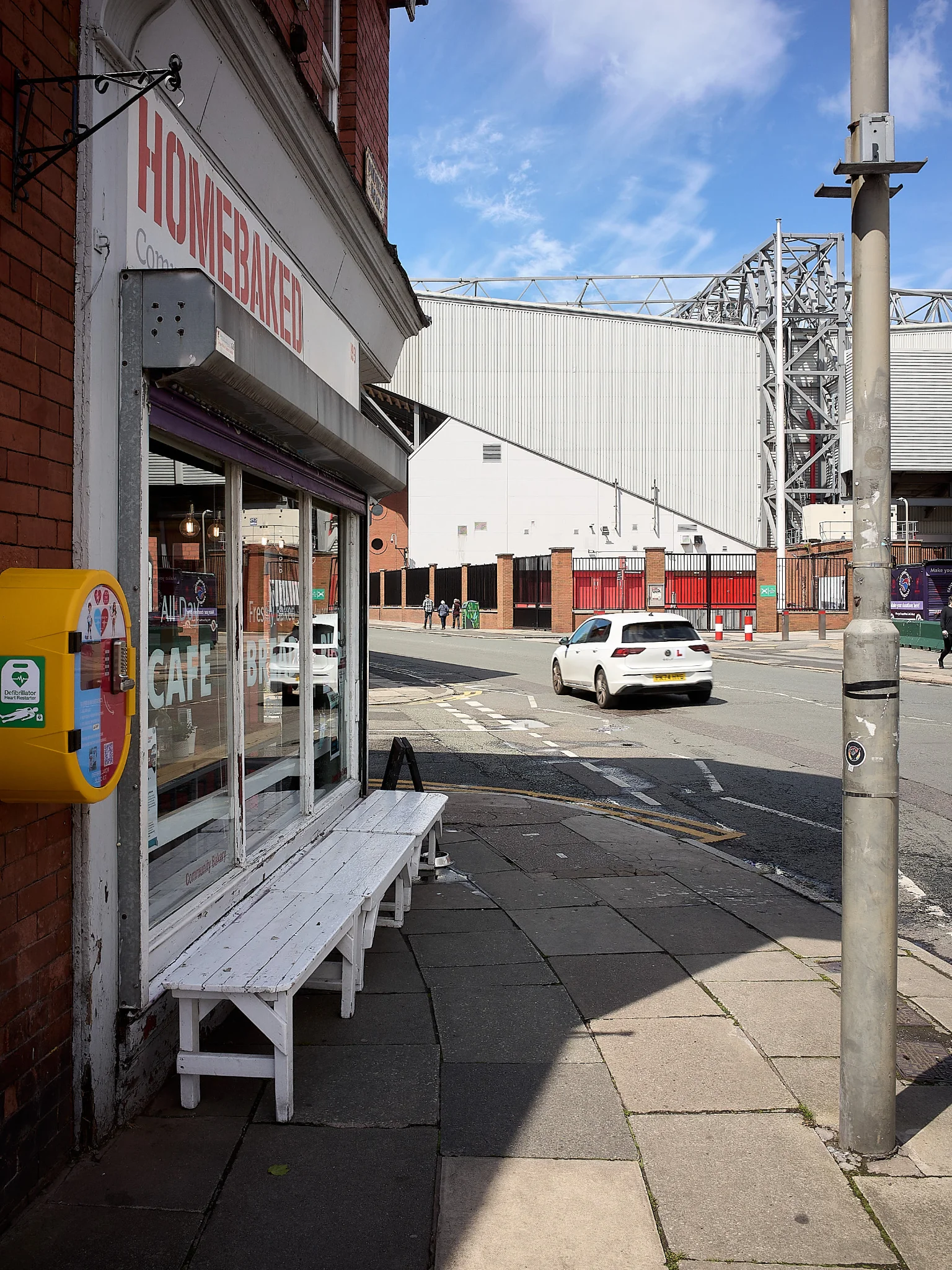
Mitchell’s Bakery has stood on Oakfield Road, Anfield since 1903. Known locally as The Pie Shop. It served pies to residents and football fans on match days for over eighty years - two families, one building, one neighbourhood.


In 2002, the Housing Market Renewal Initiative designated the area around Anfield and Everton a market failure. 1,800 residential and commercial properties were demolished. 1,300 new homes were planned to replace them. The scheme was deeply unpopular - compensation for homeowners was rarely enough to buy one of the new properties, and a community that had survived on proximity and density was being systematically dismantled. When the coalition government pulled the funding in 2010, the streets were left abandoned. The bakery, stripped of its customer base, closed in January 2011. It had been designated for demolition.
That is where this story begins.
2up2down
In 2010, artist Jeanne van Heeswijk was commissioned for the Liverpool Biennial. Her project - 2up2down - used the empty bakery building as a base for people to come together, imagine, and plan for what the area could be. Her conviction was that art can create fields of interaction: relationships, debates, the conditions for people to shape their own surroundings.

In April 2012, the community formed Homebaked Community Land Trust to take on the development of the bakery building and future community assets, with a focus on affordable housing. The following June, Homebaked Bakery Co-operative was incorporated by local residents determined to reopen the bakery. The doors opened in October 2013.
The bakery now employs 16 people, turns over £500,000 a year, and runs training courses. It uses the space as a community hub. During the pandemic, it provided freshly baked bread to local foodbanks and organised free school meal deliveries. More than a pie, as the strapline says - though the pies are, by most accounts, worth the journey from anywhere in Liverpool.
Naomi Cull, Communications and Engagement Lead at Homebaked Community Land Trust

Brick by Brick We Build Ourselves
In April 2016, Liverpool City Council purchased the bakery freehold and granted the CLT a lease, with an agreement to transfer the asset for £1 on completion of first-floor refurbishment. The CLT refurbished the ground floor bakery and the flat above - creating an affordable home for a new business and four local people.
In parallel, Homebaked CLT worked on the site adjacent to the bakery and the former recreation ground behind it. Working with URBED architects and LEDA, a participatory process ran from 2018: five community design workshops invited local residents to learn together, develop new skills, and contribute ideas. The resulting scheme included a mixture of different sized homes, community and business spaces.
The scheme was scheduled to be delivered in 2020, in partnership with Liverpool City Council and Your Housing. But setbacks came: the pandemic first, then significant issues within Liverpool City Council delayed proceedings for years. The community kept pursuing it. In 2025, Liverpool City Council decided instead to sell the properties to a traditional developer on the open market.


The house recently sold by the council to a private developer
Homebaked CLT is now pursuing multiple other sites across the neighbourhood, carrying the skills and experience from this process forward. The vision has not changed: a neighbourhood where all can live well, now and in the future.
The Model
The CLT is co-owned by people who live and work in the area. The founding belief is simple: we all deserve to live well. For Homebaked CLT, that means homes and spaces that are high quality and kept affordable - not just now, but for future generations. It also means that how we work together is as important as what gets made. Local expertise is central to planning, design and development. Other expertise - architecture, finance, environmental sustainability - is invited to the table with no hierarchy between them.
What It Shows
Homebaked is a proof of something. That demolition is not the only answer to decline. That a building - a bakery - can hold the memory of a neighbourhood long enough for the neighbourhood to organise around it. That art, when it’s serious, can be the first step toward something structural. That when communities are given the space and tools to design their own futures, what they build is more careful, more rooted, and more likely to last than what gets imposed from above.
The council sold the adjacent site to a developer in 2025. That is the condition Homebaked works in - not against a static enemy but against a system that keeps moving the goalposts. What stays constant is the neighbourhood. What stays constant is the CLT.