Granby Four Streets Community Land Trust
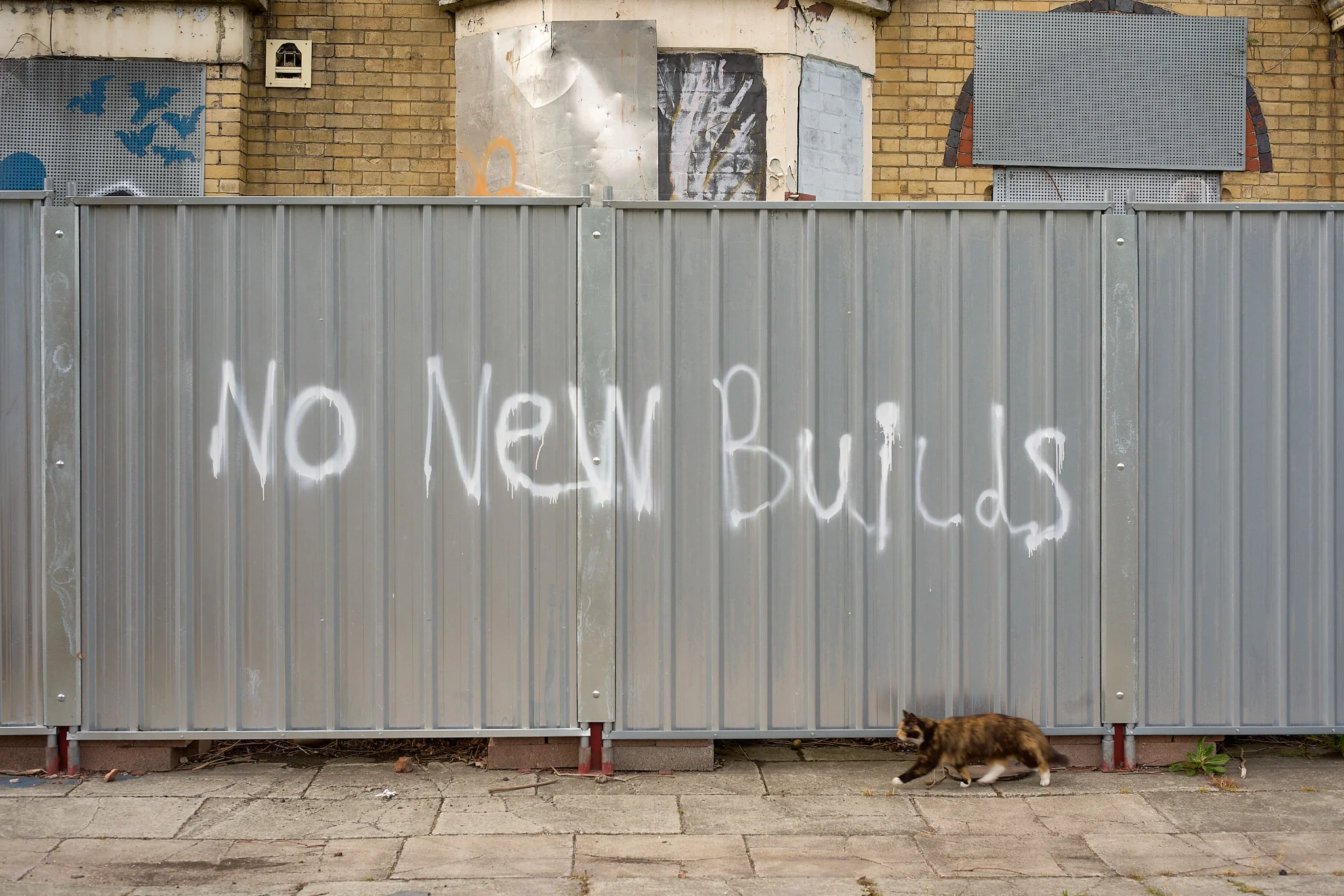
Granby is a neighbourhood in Toxteth, Liverpool 8 - four Victorian terraces built in the 1870s for artisan workers, connected by Granby Street. Beaconsfield, Cairns, Jermyn and Ducie Streets. One of the oldest multicultural neighbourhoods in the country. After World War Two, Toxteth became a Commonwealth immigration hub: the streets had a wet fish shop, a supermarket, a launderette, a bakery, a haberdashers, cafes, the first Tesco in Liverpool. Thriving.


Then the decline. From the 1960s, the area was designated a twilight zone. Landlords moved in, residents moved out. The 1981 Toxteth riots - themselves the product of decades of disinvestment and aggressive policing of young Black men - tipped it further. Streets were abandoned and demolished one by one. Of 36 streets, four remain. The Housing Market Renewal Initiative of 2002 designated what was left for clearance. When the coalition government cut that funding in 2010, the neighbourhood was left in limbo: houses boarded up, streets half-demolished, a landscape of punishment without replacement.


Are we are the future (we were dreaming of)?
But residents had never stopped. For over two decades before any formal organisation existed, they cleared, planted, painted, and campaigned. It started with someone getting a brush out and cleaning the street. That went on to others joining, then a small grant, then a table sale that became a market. Six stalls became 90. A residents association formed 34 years ago, then ended, then became a Community Land Trust in November 2011.
“We formed a CLT on nothing but imagination. It was both common sense and utterly radical.”
- Hazel Tilley, co-founder, Cairns Street resident for over 30 years.
On Power
As a residents association, the CLT had very little power because it had very little money. Then a social entrepreneur who had seen what the residents were doing lent the newly formed CLT half a million pounds. Suddenly there was power. The council had been paying lip service to community consultation - meetings, workshops, what colour would you like the tiles. Once the CLT could buy houses, the council took notice.
Hazel Tilley, CLT founder and resident at Granby Four Street


Hazel's Tilley house
In 2012, thirteen 10 properties were acquired from the council for £1 each.
London architecture collective Assemble came in as partners - not to impose a masterplan but to learn from what residents had already begun. Working with low-cost materials and salvage from nearby demolitions, they renovated houses, designed new details, made the ordinary extraordinary.
The process of restoration started with five, then another 5, 2 of which became the Winter Garden. Then the CLT asked for 2 more houses to replace the 2 residential houses used for the Winter Garden to bring the total back to 10 houses. Later a 13th house was offered, which had been vacant for about 10 years, had received grant works via Social Landlord and wasn’t able to attract further funding. It needed less work to restore than the others.
In December 2015, Assemble won the Turner Prize - the first time a collective had won it, and the first time it went to architects. The judges praised what they called “a ground-up approach to regeneration, city planning and development in opposition to corporate gentrification.” The prize money went back into the project.
Granby Workshop was set up alongside the Turner Prize nomination: a ceramics studio on Cairns Street making bespoke objects - fireplaces, tiles, household goods - from salvaged materials. The same objects that furnish the renovated houses. Made from rubble and sold to fund the work.


Five of the ten renovated houses were sold at affordable prices, five retained for social rent. Each sale protected by an anti-gentrification clause: priority always to Liverpool locals and first-time buyers with a connection to the area. Four derelict shops on the corner of Granby and Cairns Street also passed into CLT ownership.
The Winter Garden on Cairns Street
The Winter Garden on Cairns Street began as something else entirely. The original plan was ambitious: take two derelict houses, glass-roof the front sections, join them, create a covered communal space. Costed up. Too expensive. Shelved.
Then an architect visiting two other derelict houses stepped through the door and fell through the floor into the cellar. The building was covered in pigeon droppings, had a tree growing up the middle and no floors left. It was in such bad condition that residential use was impossible. On a return visit, on a sunny day, someone remembered the glass roof idea. No idea is wasted. It just might not be the right idea at the right time for the right thing.
The Winter Garden is what happened instead: a gutted terraced house, glazed, planted, transformed into a communal indoor garden. On the outside it looks like the rest of the street. Step inside and it becomes something else.
“Architecture is the poetry of space. That’s the Winter Garden. It’s not what’s on the outside - when you go in it becomes a magical space.”


The back alley gardens
The back alley behind the houses was cleared and planted at the same time. Another thing nobody had planned. Another dream that materialised sideways.
Living Here
The Granby Street Market has run since around 2007 - international poets and musicians alongside stalls selling Caribbean food, vintage clothes and handmade goods. First Saturday of the month. It started with a table sale from people who lived across the road. Six stalls. Then 90 gazebos. That is also the story of how this whole place works.
“We’re not tolerant, we’re welcoming. Who wants to be tolerated? It means I’ll just about put up with you.”
Liverpool is a port city - the oldest Chinese community in Europe, Commonwealth immigration since before the war, a population that has always been mixed. The institutional racism that drove the 1981 riots was not the racism of individuals on the street. These are different things and the distinction matters here.
On housing and what it makes possible: “If you’ve got somewhere to live and you feel secure and safe and you can afford to live there, then a lot of issues have disappeared straight away.”


On the question of whether this was the future anyone dreamed of: “I never dreamt of a future. What we wanted was quite simple - we didn’t want to move from our homes. We didn’t want to see a multiracial place that is welcoming and accepting destroyed. That’s it. And there was a recognition that if we don’t do something, we’re finished. Nobody else is going to.”
On how change happens: “Work collectively. Collective working can start with you and one person, because that’s two people, and that person will know someone else. Recognise yourself and claim the bit of space that is around you. If your destination is always the stars, but you’re only on top of the stepladder - that’s not terrible. At least you got there.”

Photography locations
Cairns Street - 53.3964° N, 2.9582° W (L8 2UN/L8 2UW) The renovated houses. The painted facades on boarded-up properties. The contrast between renovated and still-derelict on the same street. Assemble’s details: fireplace surrounds made from rubble, the quality of attention in difficult circumstances.
Granby Street - 53.3968° N, 2.9590° W (L8 2UR/L8 2US) The commercial strip. What is open and what is still boarded. The corner of Granby and Cairns where the CLT took the four derelict shops. The monthly market location.
Granby Workshop - corner of Granby Street, L8 2US The ceramics studio. If open: the objects, the materials, the work in progress.
Ducie Street / Winter Garden - 53.3958° N, 2.9578° W The glazed communal garden inside a gutted terraced house. The threshold between outside and in. Interior planting through a derelict shell.
The gaps - along Princes Road and into the triangle. Empty lots, the negative space of 32 demolished streets. The photograph that contextualises everything else.

Further reading
Assemble: assemblestudio.co.uk. Turner Prize 2015. Publication: Building Collective.
Granby Four Streets CLT: granby4streetsclt.co.uk
Granby Street Market: first Saturday of the month, 10am-4pm, Granby Street L8.