This Was Tomorrow
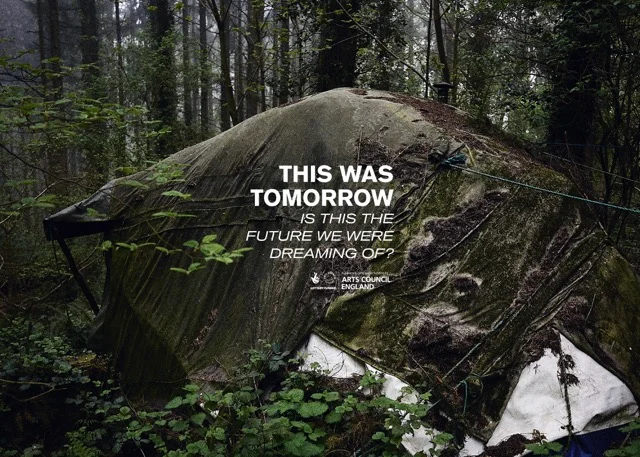
Voices and Places
I kept the images and the voices apart on purpose. You see the places - the rooms, the objects, the light - but not the people. You hear the people, but you don’t see them. Neither explains the other. It’s closer to a book than a film: a film hands you everything and you take it in; a book gives you a thread and you do the rest, the imagining, the picturing. I wanted that gap left open.
This isn’t a record of what these communities built. I’m not here to show you finished proof and have you admire other people’s achievements. What I wanted was for people to listen, and look, and feel the way you do after a good book - the life-changing kind - when you close it and want to do something. Nothing big, necessarily. Just a little rip in the routine. That voice in the back of your head whispering that’s possible, getting louder, getting clearer.
- Calder Valley Community Land Trust Hebden Bridge, Todmorden
- Cressingham Gardens Lambeth, London
- Granby Four Streets Community Land Trust Toxteth, Liverpool
- Hastings Commons Hastings
- Kesoberi Community Farm Newlyn, Cornwall
- Kitty's Launderette Anfield, Liverpool
- LILAC: Low Impact Living Affordable Community Leeds
- OWCH / New Ground Cohousing Barnet, London
- Tinker's Bubble Norton Sub Hamdon, Somerset
- Treneere Estate Penzance
- Trevone Quarry near Penryn / Mabe, Cornwall
- Two Up Two Down Anfield, Liverpool
Hear the voices in the quotes, or find every place on the map.
Host this work
Each site comes as a set of photographs, printed large and pasted straight to the wall - unframed, sometimes over what is already there, left to weather as part of the piece. Where a wall will not take paste, the prints hang on fishing line. Sizes scale to the space, and the arrangement is not fixed.
Every print comes a QR code to the voice recorded at that site. The audio and the images are kept apart on purpose - a visitor listens and looks separately, and joins the two for themselves.
One thing holds throughout: a community sees images from the other sites, not its own. The work is less a record of what each place has built than a way of putting one community’s future in front of another.
The prints are left with the host at the end. Hosting needs a wall and a bit of room; everything else travels with the work.
To talk about showing it, get in touch: info@enricopolicardo.com
Downloads
- The exhibit pack (PDF) - the full set: about the project, the artist statement, curation and print notes, and a plate for each site.
- One-page overview (PDF) - the project on a single sheet.
- Curation and print notes (PDF) - install sizes, materials and method, for venues and printers.